


Last updated: September 2026
You walk into a room and suddenly notice the lights won’t turn on. The outlets aren’t working. The television is off. Yet the rest of the house seems completely normal. If you’ve ever experienced power out in one room but not the whole house, you’re not alone.

This is a common electrical issue that can happen in homes of all ages. While some causes are relatively simple, others may indicate underlying electrical problems that require professional attention. Understanding what causes power loss in a single room can help you determine whether it’s a simple fix or a sign of a more serious electrical problem.
In this guide, we’ll explain the most common causes, what you can safely check yourself, and when it’s time to call a licensed electrician.
Why Would Only One Room Lose Power?
When power disappears throughout the entire home, the issue is often related to the utility provider or the home’s main electrical supply. When only one room loses power, the problem is usually connected to a specific circuit. Most rooms are connected to one or more electrical circuits. If something interrupts power along that circuit, only the affected room may lose electricity while the rest of the house continues operating normally. The challenge is identifying the cause of the interruption.
Common Reasons Power Is Out in One Room

1. A Tripped Circuit Breaker
One of the most common causes is a tripped breaker. Circuit breakers protect your home’s electrical system by shutting off power when they detect unsafe conditions.
Common reasons a breaker may trip include:
- Circuit overloads
- Faulty appliances
- Short circuits
- Ground faults
Even if only one room has lost power, checking the electrical panel should be your first step. A breaker may appear partially tripped and can be easy to miss. If a breaker trips repeatedly, there may be a larger electrical issue that requires investigation.

2. A Tripped GFCI Outlet
Many homeowners don’t realize that one GFCI outlet can control multiple outlets on the same circuit.
GFCI outlets are commonly installed in:
- Bathrooms
- Kitchens
- Basements
- Garages
- Laundry rooms
If a GFCI outlet trips, it may cut power to several outlets, including those in another room. Look for outlets with TEST and RESET buttons. Press the RESET button and check whether power returns.

3. A Faulty Outlet
Sometimes the issue is limited to a damaged outlet. If an outlet appears damaged, discontinue use and arrange for professional inspection.
Outlets can wear out over time because of:
- Age
- Frequent use
- Loose connections
- Internal damage
Signs of a faulty outlet may include:
- Discoloration
- Burning smells
- Buzzing sounds
- Loose plugs

4. Loose Wiring Connections
Loose wiring is a common cause of intermittent or complete power loss. Electrical connections naturally expand and contract over time because of temperature changes and regular electrical use. A loose connection may eventually interrupt power to part of a circuit.
Warning signs often include:
- Flickering lights
- Intermittent power loss
- Buzzing sounds
- Warm outlets
Because wiring is hidden behind walls, diagnosis usually requires professional testing.

5. Damaged Wiring
Wiring can become damaged because of:
- Aging insulation
- Renovations
- Rodent activity
- Moisture exposure
- Physical damage
When wiring deteriorates, power may be lost to specific rooms or outlets. In some cases, wiring damage may also create safety hazards such as overheating or electrical arcing. Professional Electrical Wiring Services can help identify and repair hidden wiring problems.

6. A Faulty Light Switch
If the issue affects only lighting, the switch itself may be the problem. A defective switch can prevent power from reaching a light fixture even when the circuit remains active. A qualified electrician can quickly determine whether the switch is responsible.
Signs may include:
- Flickering lights
- Delayed operation
- Crackling sounds
- Warm switch plates

7. Electrical Panel Problems
Sometimes the issue originates within the electrical panel itself. If multiple rooms experience intermittent problems or breakers trip frequently, the panel should be inspected.
Potential panel-related concerns include:
- Loose breaker connections
- Aging components
- Corrosion
- Internal faults
8. Hidden Electrical Damage
Electrical systems often develop problems behind walls where homeowners cannot see them. When visible causes have been ruled out, hidden electrical damage becomes more likely.
This may include:
- Loose connections
- Damaged wiring
- Junction box failures
- Overheated components
What Should You Check First?
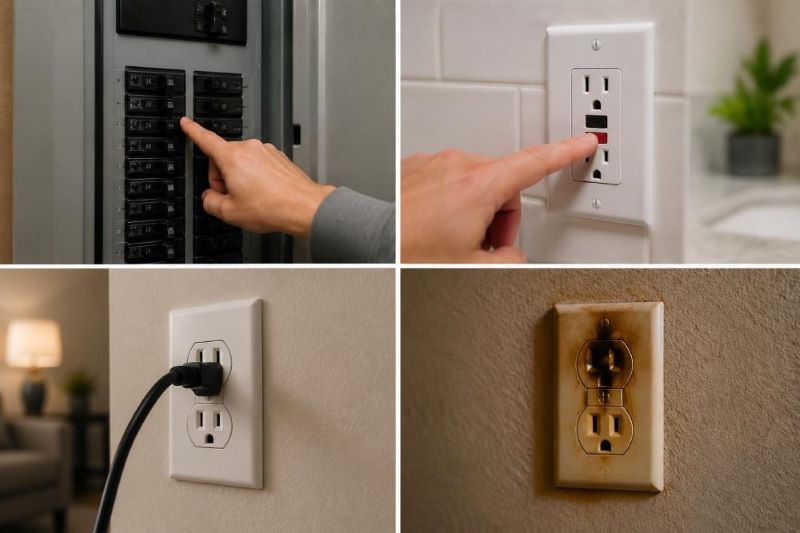
Before calling an electrician in Toronto, there are a few safe checks you can perform.
When Is It an Emergency?
A room losing power isn’t always an emergency. However, immediate attention may be necessary if power loss is accompanied by:
These signs may indicate a more serious electrical fault. If urgent symptoms are present, call our 24/7 emergency electrician in Toronto immediately at 416-882-6000.
You can also learn more about serious warning signs in our guide: Electrical Emergencies in Toronto Homes: Warning Signs, Causes, and When to Call an Emergency Electrician.
Power Out in One Room FAQs
Final Thoughts
Experiencing power out in one room while the rest of the house still has electricity can be frustrating, but the cause can often be identified through proper troubleshooting. While simple issues such as a tripped breaker or GFCI outlet may be easy to resolve, recurring power loss, damaged wiring, and electrical faults should never be ignored.
If the problem continues or is accompanied by warning signs such as burning smells, sparks, or overheating, professional diagnosis is the safest option. Our licensed electrician Toronto can identify the root cause, restore power safely, and help prevent larger electrical problems in the future.
Related Electrical Safety Guides
To learn more about common electrical problems, you may also find these guides helpful: