


Last updated: September 2026
A burning smell from an outlet is never something to ignore. While some household odors may have harmless explanations, electrical burning smells can indicate overheating components, damaged wiring, or other issues that may create serious safety risks.

Many homeowners first notice a faint odor that comes and goes. Others may smell something similar to burning plastic or overheated electronics near an outlet, switch, or electrical panel. Whatever the cause, a burning smell often indicates that something is wrong with your electrical system.
In this guide, we’ll explain why an outlet may smell like it’s burning, the dangers involved, what steps you should take immediately, and when it’s time to call a professional electrician Toronto.
Is a Burning Smell From an Outlet Dangerous?
In most cases, yes. Electrical outlets should not produce burning odors during normal operation. When you notice a burning smell, it often means excessive heat is being generated somewhere within the electrical system. Heat can damage wiring insulation, outlet components, and surrounding materials.
Even if the smell disappears after a short time, the underlying issue may still be present. For this reason, homeowners should always take a burning smell seriously.
If left unresolved, the problem may eventually lead to:
- Damaged wiring
- Melted electrical components
- Electrical arcing
- Power failures
- Fire hazards
What Does an Electrical Burning Smell Usually Smell Like?
People often describe the odor as:
- Burning plastic
- Melted rubber
- Overheated electronics
- Hot insulation
- Scorched material
The smell may be stronger when:
- Appliances are operating
- Multiple devices are plugged in
- Lights are turned on
- The affected outlet is being used
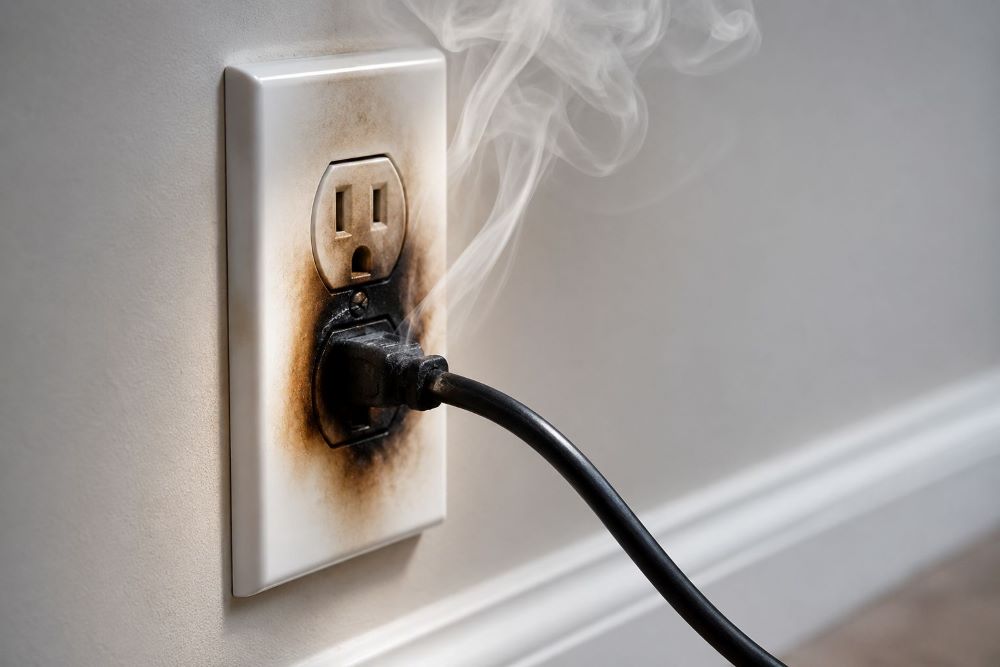
If the smell becomes stronger over time, immediate inspection is recommended.
Common Causes of a Burning Smell From an Outlet

1. Overloaded Circuits
One of the most common causes is an overloaded circuit. Every circuit is designed to carry a specific amount of electrical current. When too many devices are connected, excessive heat can develop. If multiple high-powered devices are operating on the same circuit, the outlet may begin to overheat.
Examples include:
- Space heaters
- Microwaves
- Air conditioners
- Coffee makers
- Hair dryers
- Gaming systems
Warning signs include:
- Warm outlets
- Breaker trips
- Dimming lights
- Burning odors during heavy electrical use
Reducing the load may help temporarily, but recurring overloads should be evaluated by a licensed electrician in Toronto.

2. Loose Electrical Connections
Electrical connections must be secure for electricity to flow safely. Over time, connections inside outlets can loosen because of:
- Age
- Vibration
- Wear and tear
- Previous repair work
Loose connections create electrical resistance, which generates heat. As heat increases, wiring and outlet components may begin to deteriorate. This is one of the most common causes of burning smells in residential electrical systems.

3. Damaged or Aging Wiring
Electrical wiring hidden behind walls can deteriorate over time. Common causes include:
- Aging insulation
- Physical damage
- Rodent activity
- Moisture exposure
- Previous renovation work
When wiring becomes damaged, overheating can occur. The odor may appear near an outlet even though the actual problem is located elsewhere within the circuit. This is why professional diagnosis is important. If wiring problems are identified, professional electrical wiring services can help restore safety and reliability.

4. Faulty Outlets
Outlets do not last forever. Over time, internal components can wear out.
Signs of a failing outlet may include:
- Burning smells
- Discoloration
- Cracking
- Loose plugs
- Buzzing sounds
A damaged outlet should be replaced promptly to reduce the risk of further damage.
5. Electrical Arcing
Electrical arcing occurs when electricity jumps through the air instead of following its intended path. Because arcing can create fire hazards, it should always be investigated immediately. Arcing can generate significant heat and is often accompanied by:
- Burning smells
- Popping sounds
- Sparks
- Discoloration

6. Damaged Appliances
Sometimes the outlet is not the problem. A faulty appliance may be generating excessive heat and causing the smell.
Common examples include:
- Space heaters
- Toasters
- Microwaves
- Coffee makers
- Older electronics
If the odor only appears when a specific appliance is operating, stop using the appliance until it can be evaluated.
Warning Signs You Should Never Ignore
A burning smell becomes even more concerning when combined with other warning signs. If multiple warning signs are present, the underlying electrical problem may be becoming more serious and increase the risk of electrical damage. Professional inspection should be arranged as soon as possible. Watch for:
What Should You Do If You Smell Burning From an Outlet?
If you notice sparks coming from an outlet, follow these steps.
What Not To Do
When dealing with a burning smell from an outlet, avoid these common mistakes.
When Is It an Emergency?
Some situations require immediate attention. Contact an electrician immediately if the burning smell is accompanied by:

- Smoke
- Sparks
- Visible burning
- Electrical shocks
- Repeated breaker trips
- Power loss
These symptoms may indicate a serious electrical problem. If you are experiencing urgent electrical issues, don’t wait—call our 24/7 emergency electrician in Toronto at 416-882-6000 to protect your home and family.
You can also learn more about warning signs and emergency situations in our guide: Electrical Emergencies in Toronto Homes: Warning Signs, Causes, and When to Call an Emergency Electrician.
How to Prevent Burning Smells From Outlets
While not every issue can be prevented, these steps can reduce risk.
Avoid Overloading Circuits
Distribute high-powered appliances across multiple circuits whenever possible.
Replace Damaged Outlets Promptly
Worn outlets should be replaced before they create larger problems.
Schedule Electrical Inspections
Routine inspections can identify hidden issues before they become emergencies.
Pay Attention to Warning Signs
Flickering lights, warm outlets, buzzing sounds, and breaker trips often appear before more serious issues develop.
Address Wiring Concerns Early
Small wiring problems often become more serious and more costly when ignored. Professional Electrical Wiring Services can help identify and correct potential hazards.
Burning Smell From Outlet FAQs
Final Thoughts
A burning smell from an outlet is not something homeowners should ignore. Whether the cause is overloaded circuits, loose connections, damaged wiring, or a failing outlet, the odor often indicates that excessive heat is being generated somewhere within the electrical system.
Addressing the issue early can help prevent more serious problems, including equipment damage, electrical failures, and potential fire hazards. If you notice a burning smell from an outlet in your Toronto home, a professional electrical inspection can help identify the cause and ensure your electrical system remains safe and reliable. If the burning smell isn’t limited to one outlet, see our full guide to the 10 causes of electrical burning smells.
Related Electrical Safety Guides
To learn more about common electrical problems, you may also find these guides helpful: