

Last updated: September 2026
Ice storms, summer thunderstorms, and high winds can leave Toronto homes without power when it matters most. A prolonged outage can mean a flooded basement from a stopped sump pump, spoiled food, or a furnace that won’t run in winter.
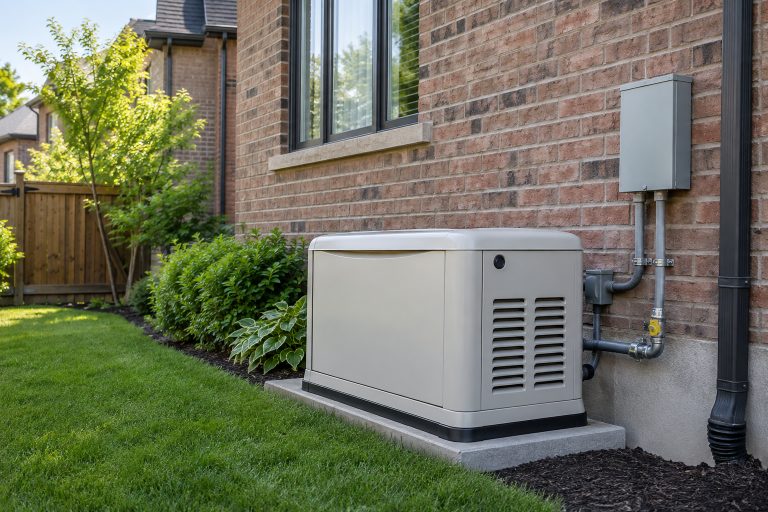
A backup generator can help keep essential systems operating safely and reliably during a power outage.
In this guide, Ontime Electric, a trusted Toronto electrician, explains your options for home generator installation in Toronto, including standby vs. portable systems, installation costs, generator sizing, transfer switches, and ESA requirements, so you can choose the right backup power solution for your home.
Your Two Real Options: Automatic Standby or Portable with a Transfer Switch
Automatic Standby Generator:
For homeowners considering standby generator installation in Toronto, Generac and Kohler are two of the most common brands.
- Permanently installed outside on a pad or approved base
- Runs on natural gas or propane
- Starts automatically within seconds of an outage
- Can power essential circuits or the whole home
- Ideal for sump pumps, medical equipment, home offices, heating, and other critical loads
Portable Generator Hookup:
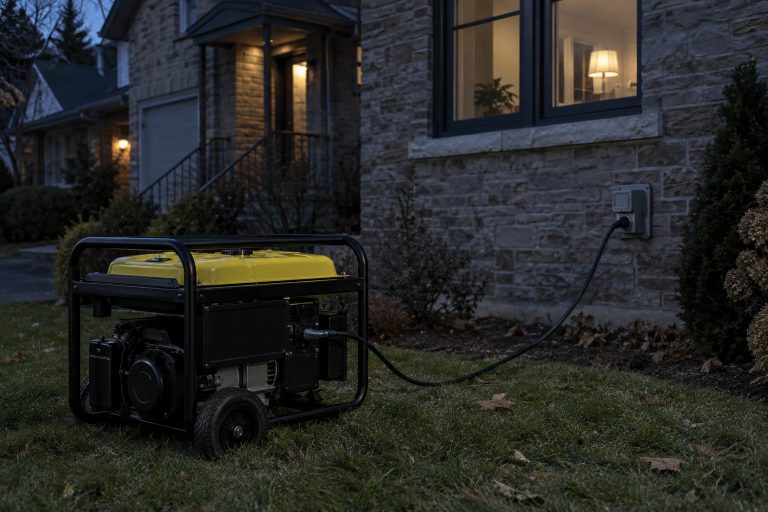
A portable generator hookup in Toronto is the more budget-friendly option. An exterior inlet box and approved transfer device can be installed at your electrical panel.
- Generator is brought outside and connected when needed
- One cord connects the generator to the home
- Selected essential circuits receive power
- No extension cords running through windows
- Prevents dangerous backfeeding when properly installed
Generator Transfer Switch Installation: Why It’s Not Optional
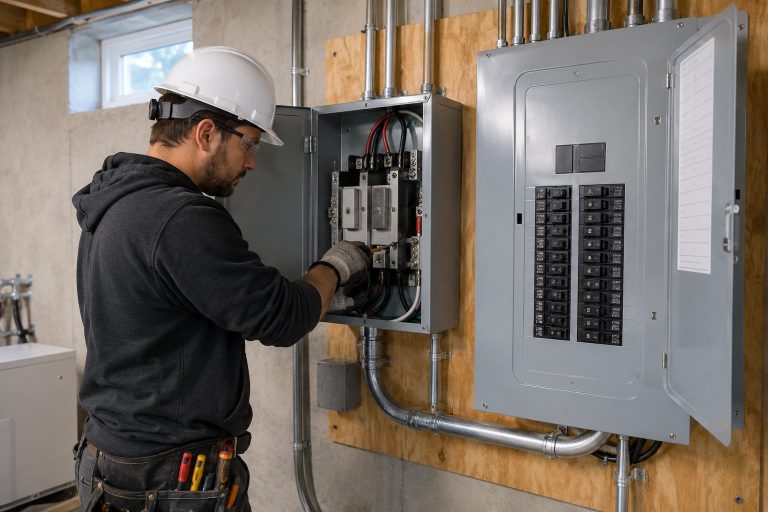
Any generator permanently connected to your home’s electrical wiring needs an approved transfer device — typically manual for portable setups and automatic for standby units. It isolates the generator from the utility supply and prevents power from feeding back onto the grid, protecting utility workers and your electrical system.
Plugging a generator into a dryer outlet with a double-ended cord — the infamous “suicide cord” — backfeeds the grid, endangers utility workers, and is illegal. If anyone offers to hook up a generator without a transfer switch, walk away.
What Does Backup Generator Installation Cost in Toronto?
Searches like “Generac generator cost including installation” deserve a straight answer, so here is how the price is actually built.
Automatic Standby Generator
For an automatic standby system, the installed price includes:
- Generator unit, sized in kilowatts
- Generator pad or approved base
- Gas line installed by a qualified gas technician working for a TSSA-registered fuels contractor
- Automatic transfer switch
- Electrical work
- ESA Notification of Work
A unit covering essential circuits costs far less than whole-home coverage. The gas line length and the distance from the generator to the electrical panel are two major site factors that can affect the installed cost.
Portable Generator Connection
For a portable-generator connection, the cost includes:
- Exterior inlet box
- Transfer switch
- Wiring between them
This is the smallest job in this category, and the generator itself is purchased separately and must be properly sized for the circuits you want to power.
Toronto & GTA Generator Installation Cost
As a general Toronto and GTA market guide, smaller residential standby generator installations can start around $3,000–$7,000, while larger whole-home systems commonly reach $10,000–$25,000+. Complex installations can cost more. Portable generator connections with an inlet and transfer switch cost substantially less. The final price depends on generator size, electrical capacity, gas requirements, installation location, transfer equipment, and site conditions. Because every home is different, Ontime Electric assesses the property first and provides the full installed price in writing before work begins, including the required ESA Notification of Work
Sizing: Buy What You Need, Not the Biggest One
One of the easiest ways to overspend is to buy more generator than you actually need. A proper load calculation starts with one question: what needs to keep running during an outage? For many Toronto homes, the essentials are the furnace fan, sump pump, fridge and freezer, some lights, the internet router, and a few outlets. A whole home generator installation that includes air conditioning, an EV charger, and an electric range requires a larger system and a different budget. The load calculation tells us — and you — which one your home actually is.
Permits, Gas, and ESA Requirements for Generator Installation
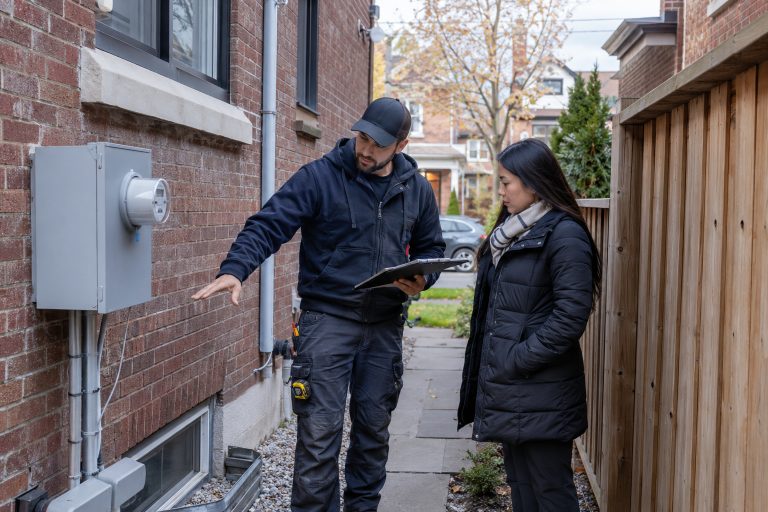
A generator permanently connected to your home’s electrical system requires an ESA Notification of Work, and the completed installation is subject to ESA review. A Licensed Electrical Contractor files the notification, and ESA provides a Certificate of Acceptance once the completed work is accepted.
Other installation requirements include:
- Gas lines for standby units must be installed by a qualified gas technician working for a TSSA-registered fuels contractor
- Proper clearances from windows, doors, air intakes, and property lines
- Generator placement that meets applicable Toronto noise requirements
- Appropriate equipment selection for the available space and site conditions
These requirements are especially important on Toronto’s narrow semi-detached and urban lots. Standby generators are considered stationary noise sources under Toronto’s Noise Bylaw, so placement matters. The site assessment should confirm clearances, gas requirements, equipment selection, and generator placement before the equipment is delivered.
What Toronto Homeowners Should Consider Before Choosing a Generator
Property type can affect which generator setup makes the most sense. Detached homes in Scarborough and North York may have more room for a standby generator, while downtown semis can have tighter clearance and noise constraints. Properties farther into York and Durham may also have different fuel, placement, and backup-power needs.
If you’re considering generator installation in Toronto or the GTA, call 416-882-6000 for a free written quote.