


Last updated: September 2026
When something electrical stops working — a dead outlet, flickering lights, or a breaker that won’t stay on — the difference between a safe repair and a dangerous guess is proper electrical troubleshooting.
That means identifying the actual cause before replacing parts or touching the wiring. This guide explains how electrical troubleshooting works, which checks are safe to do yourself, and when a licensed electrician should take over.
What Electrical Troubleshooting Actually Means

Say your chandelier has six bulbs and one goes dark. The problem may be the bulb itself, the socket, or a connection inside the fixture. Without using electrical test equipment, you can swap the dead bulb with one you know works. If the known-working bulb lights in the affected socket, the original bulb was the problem. If it does not, the fault may be in the socket or fixture.
That is the basic principle behind electrical troubleshooting: test one known variable at a time and narrow down the cause. But swapping parts has limits. If a component failed because of an electrical fault, moving a good part into the same fixture can damage it too. Anything involving wiring, energized components, or electrical testing should be left to a professional.
How Electricians Troubleshoot Electrical Problems
Step 1. Symptom interview — when the problem happens, what is affected, what equipment is running, and whether anything changed recently.
Step 2. Visual inspection — checking the electrical panel, outlets, switches, fixtures, and accessible connections for signs of heat, damage, or previous alterations.
Step 3. Circuit isolation — identifying the affected circuit and narrowing the problem to a particular device, connection, or section of wiring.
Step 4. Electrical testing — using a multimeter and other test equipment to check voltage, continuity, grounding, and circuit conditions that visual inspection cannot confirm.
Step 5. Confirm, then repair — fixing the verified electrical fault rather than simply replacing the part showing the symptom.
Common Electrical Problems and What They Can Mean
Different symptoms can come from several possible causes:
- Dead outlet — a tripped breaker or GFCI, failed receptacle, loose connection, or an upstream outlet on the same circuit
- Breaker keeps tripping — circuit overload, short circuit, ground fault, faulty appliance, damaged wiring, or a failing breaker
- Flickering or dimming lights — loose bulb, fixture problem, loose connection, overloaded circuit, or voltage issue
- Power out in one room — tripped breaker, GFCI, failed device, or an open connection somewhere on the circuit
- Outlet or switch feels warm — overloaded device, loose connection, damaged wiring, or another overheating condition
- Buzzing from an outlet, switch, or panel — loose connections, arcing, damaged equipment, or another electrical fault
- Burning smell or scorch marks — overheating or damaged electrical components that require immediate attention
The symptom helps narrow down where to start, but it does not always identify the cause by itself. That is why repeated or unexplained electrical problems require proper diagnosis.
Safe Electrical Checks You Can Do First
Stop there if troubleshooting would require removing an electrical panel cover, opening wiring connections, or testing energized wiring.
Why Electrical Problems Sometimes Come and Go
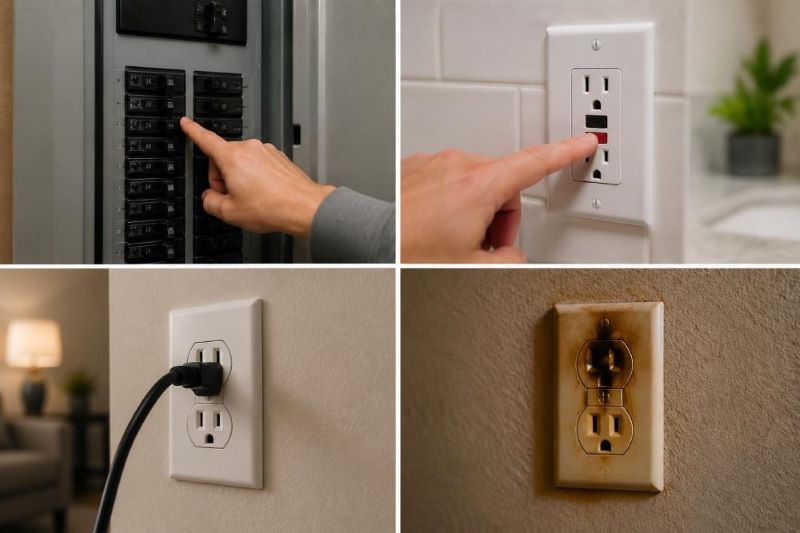
Some electrical faults are intermittent. An outlet may work for hours and then stop, lights may flicker only when an appliance starts, or a breaker may trip only occasionally. Intermittent electrical problems can be caused by loose connections, changing electrical loads, heat, moisture, failing equipment, or wiring that develops a fault only under certain conditions.
Before calling an electrician, note when the problem occurs, what appliances are running, which rooms or devices are affected, and whether you notice heat, buzzing, odours, sparks, or discolouration. These details can make an intermittent fault easier to diagnose.
Electrical Troubleshooting in Older Toronto Homes
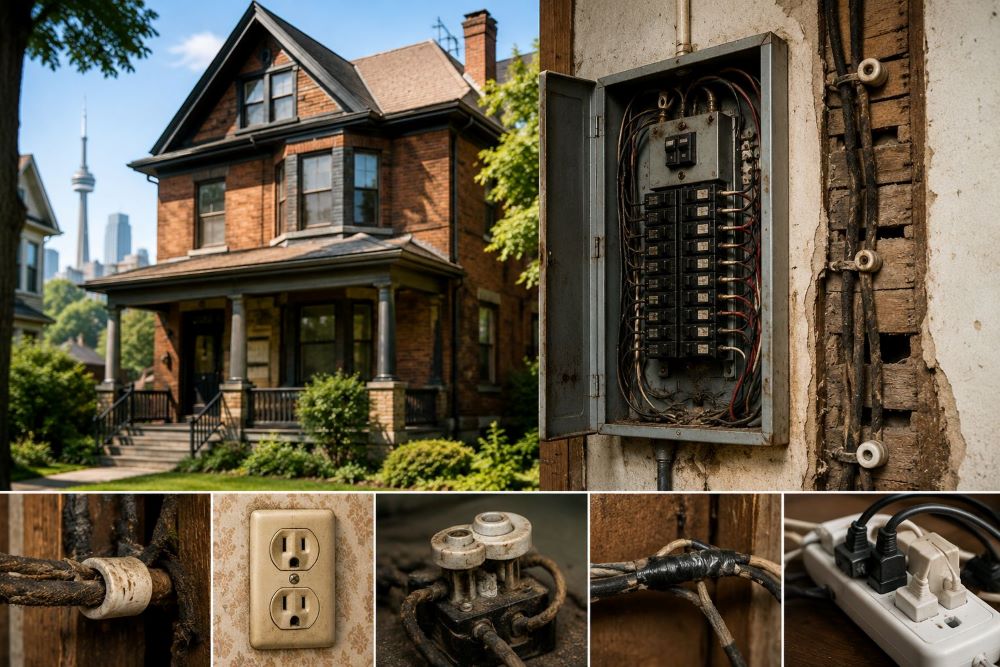
Troubleshooting can be more complicated in older Toronto homes because the electrical system may have been modified several times over the years. A home may contain newer copper wiring alongside aluminum wiring, knob-and-tube wiring, older electrical panels, added circuits, or previous renovations. A problem that appears to involve one outlet or light may sometimes trace back to an older connection or modification elsewhere on the circuit.
This does not mean every electrical problem in an older home requires rewiring. Proper troubleshooting identifies the specific fault first and determines whether a localized repair or a broader electrical upgrade is actually necessary.
When to Stop Troubleshooting and Call an Electrician
Stop using the affected circuit and call a professional if you notice a burning smell from an outlet, switch, or electrical panel; sparks coming from an outlet; smoke or visible scorching; a breaker that trips immediately after being reset; an outlet, switch, breaker, or panel that feels unusually hot; buzzing or crackling from the electrical panel; electrical shocks or tingling from switches, outlets, or appliances; or exposed or damaged wiring. For burning smells, sparks, smoke, or another immediate electrical hazard, contact our 24/7 emergency electricians. For non-emergency diagnosis and repairs, see our electrical repair service.
When Professional Electrical Troubleshooting Is Needed
If the basic checks above do not identify the problem, Ontime Electric’s master electricians provide electrical troubleshooting and repairs throughout Toronto, North York, Scarborough, Etobicoke, and the GTA. We have over 20 years of experience and operate under ECRA/ESA Licence #7009495.
For professional diagnosis and repair, see our electrical repair and troubleshooting service, or call 416-882-6000 for a free quote.
